
Sayart.net - Montreal Exhibition Explores Resilient Japanese Architecture Through Alternative Lens

  • January 22, 2026 (Thu)

Montreal Exhibition Explores Resilient Japanese Architecture Through Alternative Lens

Sayart / Published January 10, 2026 02:58 AM
  • -
  • +
  • print

An innovative exhibition at the Université du Québec à Montréal's Centre de design offers visitors a fresh perspective on Japanese architecture and its remarkable ability to withstand natural disasters. "Built Environment: An Alternative Guide to Japan" runs through January 25, 2026, featuring 80 carefully selected projects from across Japan's 47 prefectures. The exhibition, curated by Shunsuke Kurakata, Satoshi Hachima, and Kenjiro Hosaka, presents a comprehensive look at how Japanese builders, engineers, and architects have developed resilient structures that respond to the country's unique environmental challenges. The project represents a collaboration with the Japan Foundation and receives support from the Consulate General of Japan in Montreal.

The showcase includes works by some of Japan's most celebrated architectural figures, including 2014 Pritzker Prize winner Shigeru Ban, renowned for his innovative use of paper tubes in disaster relief structures, and Kengo Kuma, the architect behind the recent renovation of New York's Museum of Modern Art. Other featured masters include Yoshio Taniguchi, Isamu Noguchi, and 2019 Pritzker laureate Arata Isozaki. The selected projects span various categories, from residential buildings and public infrastructure to landscape designs and civil engineering marvels like the Honshu-Shikoku Bridge Project. This diverse collection demonstrates how traditional Japanese building wisdom merges with contemporary technology to create structures that honor both heritage and innovation.

Japan's geographic reality makes architectural resilience not just desirable but essential. The archipelago experiences frequent earthquakes, volcanic eruptions, tsunamis, and typhoons, while most regions contend with four distinct seasons that test building materials and design. The exhibition explores how these extreme conditions have shaped a construction culture that prioritizes flexibility, durability, and harmony with nature. By examining the interaction between architecture, civil engineering, and landscape design, the curators reveal a holistic approach to building that treats structures as part of larger ecological systems rather than isolated objects. This perspective offers valuable insights for other regions facing climate change impacts.

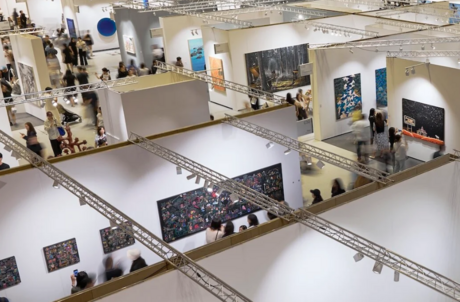
The exhibition design itself reflects Japanese aesthetic principles through its innovative presentation. Projects are displayed on origami-inspired plywood structures that are folded, angular, and sometimes cubic in form. These displays are arranged across the exhibition floor to mirror a map of the Japanese archipelago, with its four main islands—Hokkaido, Honshu, Shikoku, and Kyushu—clearly delineated. Video projections enhance the immersive experience, allowing visitors to understand the spatial relationships between projects and their environmental contexts. This thoughtful layout transforms the gallery into a three-dimensional map that visitors can physically navigate, creating a more engaging learning experience than traditional wall-mounted displays.

A special roundtable discussion titled "The Resilience of the Built Environment" is scheduled for January 21, 2026, at 2 p.m., organized in collaboration with UQAM's Pôle sur la ville résiliente research group. This interdisciplinary gathering of approximately 40 scholars will compare resilience strategies in Quebec and Japan, fostering cross-cultural dialogue on climate adaptation. The Centre de design, located in downtown Montreal, offers free admission to its 400-square-meter exhibition space from Wednesday through Sunday. According to Centre director Patrick Evans, the exhibition provides inspiring examples that can help Quebec rethink its own built environment's resilience, proving that Japan's thousands of years of architectural evolution offer crucial lessons for contemporary climate challenges.


An innovative exhibition at the Université du Québec à Montréal's Centre de design offers visitors a fresh perspective on Japanese architecture and its remarkable ability to withstand natural disasters. "Built Environment: An Alternative Guide to Japan" runs through January 25, 2026, featuring 80 carefully selected projects from across Japan's 47 prefectures. The exhibition, curated by Shunsuke Kurakata, Satoshi Hachima, and Kenjiro Hosaka, presents a comprehensive look at how Japanese builders, engineers, and architects have developed resilient structures that respond to the country's unique environmental challenges. The project represents a collaboration with the Japan Foundation and receives support from the Consulate General of Japan in Montreal.

The showcase includes works by some of Japan's most celebrated architectural figures, including 2014 Pritzker Prize winner Shigeru Ban, renowned for his innovative use of paper tubes in disaster relief structures, and Kengo Kuma, the architect behind the recent renovation of New York's Museum of Modern Art. Other featured masters include Yoshio Taniguchi, Isamu Noguchi, and 2019 Pritzker laureate Arata Isozaki. The selected projects span various categories, from residential buildings and public infrastructure to landscape designs and civil engineering marvels like the Honshu-Shikoku Bridge Project. This diverse collection demonstrates how traditional Japanese building wisdom merges with contemporary technology to create structures that honor both heritage and innovation.

Japan's geographic reality makes architectural resilience not just desirable but essential. The archipelago experiences frequent earthquakes, volcanic eruptions, tsunamis, and typhoons, while most regions contend with four distinct seasons that test building materials and design. The exhibition explores how these extreme conditions have shaped a construction culture that prioritizes flexibility, durability, and harmony with nature. By examining the interaction between architecture, civil engineering, and landscape design, the curators reveal a holistic approach to building that treats structures as part of larger ecological systems rather than isolated objects. This perspective offers valuable insights for other regions facing climate change impacts.

The exhibition design itself reflects Japanese aesthetic principles through its innovative presentation. Projects are displayed on origami-inspired plywood structures that are folded, angular, and sometimes cubic in form. These displays are arranged across the exhibition floor to mirror a map of the Japanese archipelago, with its four main islands—Hokkaido, Honshu, Shikoku, and Kyushu—clearly delineated. Video projections enhance the immersive experience, allowing visitors to understand the spatial relationships between projects and their environmental contexts. This thoughtful layout transforms the gallery into a three-dimensional map that visitors can physically navigate, creating a more engaging learning experience than traditional wall-mounted displays.

A special roundtable discussion titled "The Resilience of the Built Environment" is scheduled for January 21, 2026, at 2 p.m., organized in collaboration with UQAM's Pôle sur la ville résiliente research group. This interdisciplinary gathering of approximately 40 scholars will compare resilience strategies in Quebec and Japan, fostering cross-cultural dialogue on climate adaptation. The Centre de design, located in downtown Montreal, offers free admission to its 400-square-meter exhibition space from Wednesday through Sunday. According to Centre director Patrick Evans, the exhibition provides inspiring examples that can help Quebec rethink its own built environment's resilience, proving that Japan's thousands of years of architectural evolution offer crucial lessons for contemporary climate challenges.

WEEKLY HOTISSUE