


The Portland Art Museum has completed a transformative $116 million expansion and renovation project that adds nearly 100,000 square feet of public and gallery space to its downtown campus. The centerpiece of the expansion is a striking 21,000-square-foot glass pavilion named after Mark Rothko, the renowned abstract expressionist painter who grew up in Portland and attended the museum's art school. The project integrates two neighboring buildings and represents one of the most significant capital investments in the arts in Oregon's history.
The connection to Rothko stems from the museum's 2012 retrospective exhibition, which revealed to many locals that the celebrated artist had his artistic beginnings in their city. With the blessing of Rothko's heirs, museum leadership decided to honor the hometown hero rather than financial donors in naming the signature glass pavilion. This privately funded renovation aims to reinvigorate Portland's cultural center as the city continues recovering from post-pandemic economic challenges.
The museum's architectural evolution spans nearly a century, beginning with Pietro Belluschi's 1932 modernist design for the main building. The young Portland architect secured Frank Lloyd Wright's endorsement for his contemporary vision after trustees initially favored a traditional Georgian-style structure. The elegant brick and travertine building faces Portland's south park blocks, a green corridor along the downtown core. The second structure, the chunky 1927 Mark Building, was originally a Masonic Temple that the museum acquired in 1994, later converting its south side into modern and contemporary art galleries in 2005.
Under Director Brian Ferriso's leadership since 2006, the museum has undergone a remarkable financial turnaround. Over two decades, Ferriso systematically restored the institution's historically precarious finances, raising $30 million for the endowment—now totaling $90 million—while avoiding long-term debt. His success stemmed partly from recognizing that many potential visitors viewed the museum complex as an uninviting fortress. The solution was the transparent Rothko Pavilion, designed by Portland's Hennebery Eddy Architects and Chicago-based Vinci Hamp Architects.
The glass pavilion serves as both a physical and symbolic expression of openness, featuring ground-level access for cyclists and pedestrians while creating a glowing beacon for downtown arts when illuminated at night. A new courtyard on the pavilion's west side provides outdoor seating for a café, with views of the museum's lobby and gift shop framed by Ugo Rondinone's striking gilded bronze Sun sculpture—already popular for visitor selfies. The design underwent revisions after neighborhood residents successfully lobbied against restrictions on plaza access, resulting in a 24-hour glass tunnel for pedestrians and bicycles.
Walking through this ground-level passage, visitors can view artworks in the new Black Art and Experiences galleries in the Mark Building, featuring installations by Portland artist Lisa Jarrett alongside multimedia compositions by Mickalene Thomas. These galleries are supported by the 1803 Fund, an ambitious citywide initiative aimed at re-engaging Portland's Black community. The museum's commitment to diversity extends throughout its expanded programming and exhibition spaces.
The museum's Native American art collection, begun in 1918, now encompasses over 3,500 historical and contemporary objects. Works by masters like Allan Houser, Charles Edenshaw, and Maria Martinez are displayed alongside Northwest contemporary artists including Lillian Pitt, Joe Federson, Wendy Red Star, James Lavadour, Sara Siestreem, and Marie Watt, who serves as an artist-trustee. Curator Kathleen Ash-Milby, who served as commissioner and curator for Jeffrey Gibson's exhibition at the 2024 Venice Biennale US Pavilion, oversees plans for a major redesign of the Native American permanent collection galleries.
Ash-Milby's vision moves beyond traditional display methods, stating, "My plan is to involve contemporary Native artists in rethinking possibilities for display. We really don't need another white box with a march through time—and there are so many new possibilities with color and lighting we can consider." Current exhibitions showcase contemporary and historic Native art across two floors, featuring photography, sculpture, fashion, and basketry, plus galleries devoted to Northwest artists including over 40 paintings and mixed-media sculptures by Rick Bartow, a member of the Mad River band of the Wiyot Tribe.
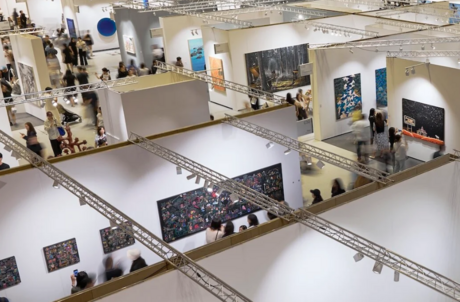
During Ferriso's tenure, the museum increased its curatorial positions from three to nine, with most endowed in perpetuity. The expanded gallery spaces prioritize clarity of orientation, with enlarged openings facing circulation routes for easy visual access. The Rothko Pavilion's interior maintains an almost austere palette: softly etched glass panels, minimally detailed display walls, and white oak floors throughout. Exhibition spaces span two floors with outdoor balconies on both sides of the structure.
The Rothko connection is explicitly celebrated through an intimate exhibition of several Rothko paintings in the Mark galleries, with agreements for future family loans, and "Abstraction Since Mark Rothko," surveying color-field paintings from the 1970s. Several works come from critic Clement Greenberg's private collection, purchased by the museum in 2000, including exemplary canvases by Helen Frankenthaler, Kenneth Noland, and Jules Olitski, though some pieces raise questions about Greenberg's celebrated visual expertise.
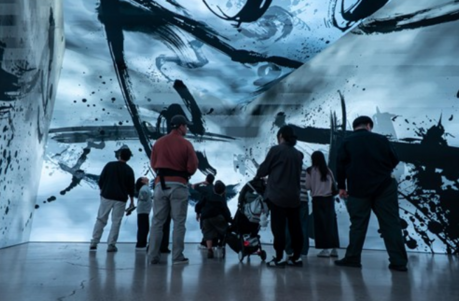
Recent acquisitions include approximately 300 new contemporary artworks by Jeffrey Gibson, Simone Leigh, Wendy Red Star, Pedro Reyes, Carrie Mae Weems, and Wolfgang Tillmans. These will be featured in the Crumpacker Center for New Art, a 2,700-square-foot former library converted into the museum's largest gallery. The opening installation features Pipilotti Rist's "4th Floor to Mildness," originally created for New York's New Museum, where visitors view floating underwater imagery on ceiling-mounted screens while reclining on raft-like floor beds.
The museum's innovative programming extends to the PAM CUT Center for an Untold Tomorrow, housed in the renovated Tomorrow Theater, a former adult venue in Southeast Portland acquired in 2023. Directed by Amy Dotson, the museum's inaugural curator of film and new media, the center specializes in "cinema unbound," hosting one-night events, performances, interactive storytelling, gaming, local artist workshops, and sessions with renowned directors like Guillermo del Toro. This venue replaces the former Film Study Center, whose location confused visitors seeking elevators and restrooms in the Mark Building.
Traditional art remains central to the museum's mission, though masterworks are now presented through thematic rather than chronological displays. Impressionist, American, and European artworks continue to attract visitors with conventional tastes, while the Asian art galleries in the Belluschi building maintain their elegant, timeless character. The multimedia installations and "cultural snacking" approach reflect the museum's embrace of individual artistic appreciation unguided by master narratives.
As Ferriso prepares to depart for his new role leading the Dallas Museum of Art, his legacy includes transforming the Portland Art Museum into a more diverse and accessible institution. His first major project in Dallas will involve expanding and reorienting programming at the Edward Larrabe Barnes-designed building. The renovated Portland Art Museum stands as testament to his talent for institutional transformation, offering a model for engaging broader communities while honoring both traditional masterworks and contemporary innovation.