


Dazed Club continues its monthly tradition of spotlighting innovative creatives from around the world, featuring four diverse artists who are pushing boundaries in photography, digital art, painting, and cultural curation. This month's spotlight includes creators from Indonesia, Ghana, the UK, and Eastern Europe, each bringing unique perspectives to contemporary art and culture.
Denisa Rahma, an Indonesian photographer and computer graphics artist based in Toronto, has developed a distinctive style that blends 3D art with traditional photography to create surreal, dreamlike images. Drawing inspiration from everyday human scenarios, Rahma transforms ordinary moments into mystical experiences, whether capturing someone having a bad hair day, people dancing at concerts, or sibling rivalry. Her recent work has evolved toward minimalism, incorporating negative space and optical illusions.
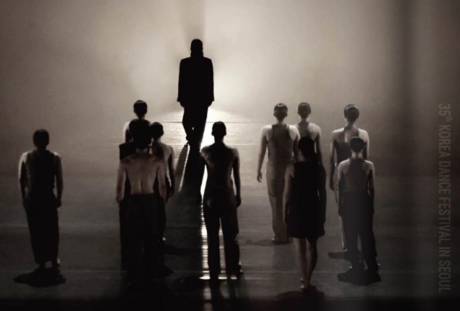
Rahma's creative process often begins without a fixed concept, with stories emerging during post-production. Her projects "Marcolino" explores workplace rivalry, while "Dancer in the Dark" captures the intimate moment of someone dancing alone on the subway. She turned to 3D art to overcome the budget and location constraints of traditional photography, allowing her to build entire worlds from scratch. Growing up in Indonesia surrounded by mystical and spiritual ideas has significantly influenced her artistic vision, making her open to exploring concepts beyond conventional understanding.
Edward Konu, a 20-year-old photographer from Tema, Ghana, discovered his passion for photography by accident during a high school career day. With no clear career path in mind and only cameras and field vests at home, he was called upon to photograph the school event despite having no experience. This spontaneous beginning sparked a journey that continued during the COVID-19 break when he collaborated with a local model.
Konu's work is heavily influenced by nature, drawing color inspiration from plants, clouds, and natural elements. He has since collaborated with Free The Youth, a Ghanaian street-style collective, which exposed him to editorial photography and provided mentorship opportunities. This year, he had the opportunity to shoot one of their biggest collaborations with Jordan, filmed in Ghana. His creative approach focuses on editing with emotions using cool colors, and he draws inspiration from artists like Gabriel Moses, Ashmond Kwesi, and PM Boakye.
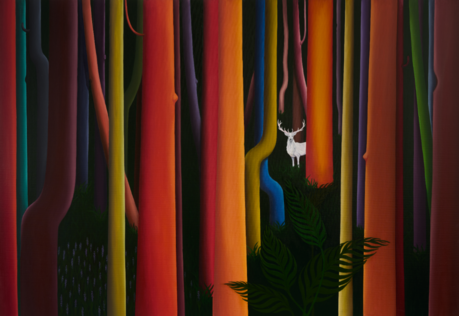
Ellie Mai Butler, a 22-year-old abstract-expressionist painter from Lincoln, specializes in creating playful yet evocative pieces using acrylic paints and oil pastels on wooden panels. Her work emphasizes texture and color, emerging from a personal commitment to create genuine self-reflection rather than art designed to please others. This shift led her to explore reductionism, beginning with small black-and-white drawings that evolved into larger textural paintings with vibrant colors.
Butler's artistic practice takes abstraction literally, splitting subjects into smaller, visually distinct segments that combine to form cohesive images. This approach reflects her fascination with the relationship between abstraction and figuration, influenced by artists such as Amy Sillman and Wassily Kandinsky. Despite their playful and colorful appearance, her paintings contain layers of personal experiences and trauma, serving as a way to process emotions and create tangible interpretations for others.
Zlata Mechetina, working under the name Fetchish, operates as a curator and producer with backgrounds in art history and theater. Her practice exists at the intersection of contemporary art, club culture, and post-internet sensibilities, exploring how music tonalities, performance, and collective behavior create new cultural languages. Her work bridges nightlife and critical theory writing, treating both as experimental stages.
Fetchish began as a small collective for Eastern European diaspora artists in London and has grown into a multidisciplinary group hosting cultural events and supporting artistic projects across London, Berlin, Los Angeles, and New York City. The collective focuses on experimental sound, hybrid performance, and community-led club culture, bringing academic concepts like collectivity and liminality into embodied, collaborative experiences. Mechetina describes Fetchish as "curious, terrifying, theatrical."
The collective is developing a multidisciplinary event for Cambridge Union on November 29, 2025, featuring Babynymph in a debate-meets-performance format. The event will address the proposition that Cambridge nightlife is "dull and dead," with the opposition led by London's Fetish Studio responding through basslines rather than speeches. The night promises experimental electronics, heavy rhythms, and euphoria, representing Fetchish's approach to treating club culture as a site of discourse and cultural exchange.