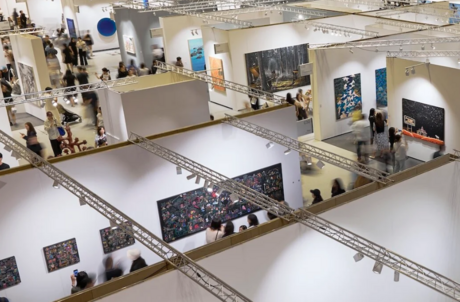



Mexico City's prestigious Museo Jumex is preparing to launch an ambitious exhibition that combines the worlds of football and contemporary art, strategically timed to coincide with the 2026 FIFA World Cup. The private museum, established by renowned collector Eugenio López Alonso in 2013, will present "Fútbol y Arte. Esa misma emoción" (Football & Art. A Shared Emotion) from March 28 through July 26, 2026, ending just one week after the World Cup Final in New York.
The exhibition will be housed in the museum's David Chipperfield-designed building located in Mexico City's upscale Polanco neighborhood. This timing holds special significance as Mexico City's iconic Estadio Azteca is scheduled to host five World Cup matches, including the tournament's opening game on June 11, 2026.
Curated by prominent Mexican art critic and independent curator Guillermo Santamarina, the comprehensive exhibition will showcase approximately 100 works created by 60 artists from around the globe. The exhibition design will be handled by architect Mauricio Rocha, who gained recognition for his 2021 addition to the Museo Anahuacalli and for designing the studio of his mother, celebrated photographer Graciela Iturbide. Rocha's innovative design will transform the museum space to incorporate various symbolic elements representing what many call "the World's Game."
The exhibition will be organized into distinct thematic sections that explore gender, community, identity, and universality in relation to football culture. According to museum officials, these sections will examine both the playful aspects of the game and its critical political dimensions, offering visitors a comprehensive view of football's cultural impact.
Among the notable works on display will be Marta Minujín's striking 1977 painting depicting a colossal blonde woman in a bikini lying across a soccer stadium, titled "Mi Mundial" (My World Cup). The exhibition will also feature a powerful 2007 black-and-white photograph by Graciela Iturbide showing a torn football net on an Italian beach, capturing the universal presence of the sport.
More contemporary pieces include photographic documentation of a collaborative intervention by artists Melanie Smith and Rafael Ortega at Estadio Azteca. Their 2010 work, "Estadio Azteca, Proeza maleable" (Estadio Azteca, Malleable Deed), involved visitors holding up dozens of posters to collectively form an image of a pre-Columbian artifact within the stadium setting.
The Museo Jumex has commissioned three artists—Diego Berruecos, Iñaki Bonillas, and Sofía Echeverri—to create entirely new works specifically for this exhibition. Additionally, Mexico City-based artist Clotilde Jiménez has been tasked with developing the exhibition's visual identity and branding.
In the museum's outdoor plaza, visitors will encounter "Tribunas" (Stands), a sculptural installation created by Mexican artist collective Tercerunquinto. This environmentally conscious piece consists of bleacher structures constructed entirely from recycled seats sourced from the historic Estadio Azteca, creating a direct physical connection between the art world and football history.
The Museo Jumex joins a growing trend of major cultural institutions exploring the intersection of art and sports. Last year, the San Francisco Museum of Modern Art organized "Get in the Game: Sports, Art, Culture," a substantial exhibition featuring more than 200 works. This touring exhibition is currently on view at the Crystal Bridges Museum in Bentonville, Arkansas, and is scheduled to travel to the Pérez Art Museum Miami in the coming year.
Similarly, the Nelson-Atkins Museum of Art in Kansas City, Missouri, opened "Personal Best" this fall, an exhibition highlighting the work of six local artist-athletes, demonstrating the widespread interest in sports-related art programming across American museums.
Reflecting on the cultural significance of the upcoming exhibition, curator Guillermo Santamarina emphasized football's central role in contemporary visual culture. "Categorically, modern visual culture finds its most resplendent peak in the network of representations and social rituals related to the game of soccer," Santamarina stated. "Soccer is a system of imagination and information that lives and breathes the complex reality of the human species in the 21st century, and indeed, the incalculable emotions around it."
The exhibition represents a significant cultural moment for Mexico City as it prepares to welcome international visitors for the World Cup, positioning the city not only as a sporting destination but as a major center for contemporary art and cultural dialogue.