
Sayart.net - Damien Hirst’s First Major Asian Retrospective Opens in Seoul, Raising Questions Beyond Spectacle

  • March 25, 2026 (Wed)
cover image

Damien Hirst’s First Major Asian Retrospective Opens in Seoul, Raising Questions Beyond Spectacle

Published March 24, 2026 09:18 PM

The National Museum of Modern and Contemporary Art has opened the first large-scale Asian retrospective of British artist Damien Hirst on March 25. The exhibition runs through August 30 at the MMCA Seoul.

The exhibition presents a comprehensive overview of Hirst’s artistic trajectory spanning more than three decades, from his early works in the 1990s to his recent paintings. It is organized around key bodies of work, including the Natural History series, Medicine Cabinets, Spot Paintings, and later large-scale paintings, encompassing sculpture, installation, and painting.

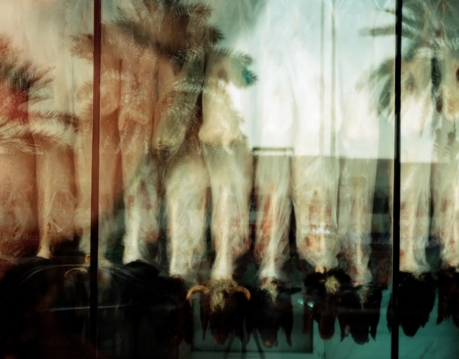
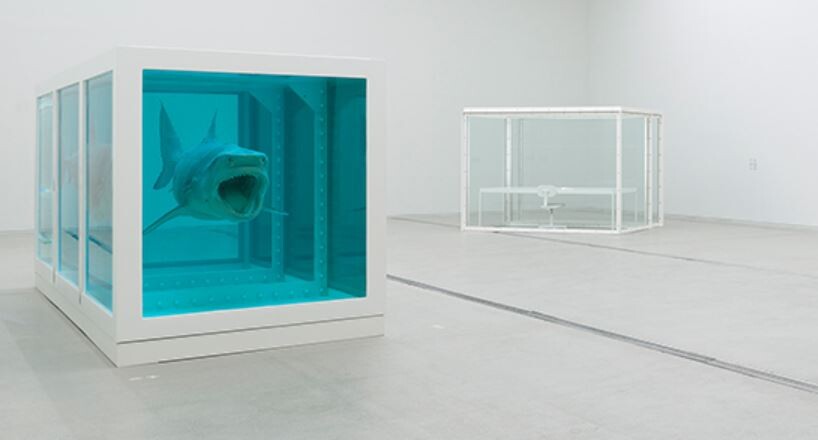
At the center of the exhibition are works from the Natural History series, in which animals such as sharks, sheep, and cows are preserved in formaldehyde tanks. These pieces confront viewers with the physical reality of death, forming a foundational axis of Hirst’s practice. The Medicine Cabinet series, composed of meticulously arranged pharmaceutical products, reflects on systems of belief, healing, and dependency in contemporary society. Meanwhile, the Spot Paintings, characterized by evenly spaced colored dots, explore repetition, order, and the mechanization of painting, distancing the work from emotional expression.

The exhibition also includes works featuring butterfly wings and recent large-scale paintings, demonstrating a shift in Hirst’s practice toward painterly expansion, decorative complexity, and material inquiry. Several installations employ biological materials and industrial fabrication processes, occupying space at a monumental scale and shaping the viewer’s physical experience.

The curatorial design further reinforces these themes. Gallery sections are arranged to evoke the atmosphere of a scientific display or laboratory, using controlled lighting and serial presentation to emphasize the notion of “life on display.” Large installations are placed within open spaces, encouraging viewers to navigate around the works and engage with their physical presence.

According to the museum, the exhibition aims to introduce a major figure of international contemporary art to Korean audiences while expanding public engagement. At the same time, it has reignited discussion over the role of public institutions, particularly as large-scale exhibitions featuring high-value works raise questions about the balance between accessibility, spectacle, and institutional responsibility.

As Hirst’s works—long situated at the intersection of death, science, belief, and capital—enter the institutional framework of a national museum, the exhibition leaves an open question: are viewers confronting the reality of life and death, or witnessing another system through which they are mediated and consumed?

SayArt.net
Maria Kim sayart2022@gmail.com

The National Museum of Modern and Contemporary Art has opened the first large-scale Asian retrospective of British artist Damien Hirst on March 25. The exhibition runs through August 30 at the MMCA Seoul.

The exhibition presents a comprehensive overview of Hirst’s artistic trajectory spanning more than three decades, from his early works in the 1990s to his recent paintings. It is organized around key bodies of work, including the Natural History series, Medicine Cabinets, Spot Paintings, and later large-scale paintings, encompassing sculpture, installation, and painting.

At the center of the exhibition are works from the Natural History series, in which animals such as sharks, sheep, and cows are preserved in formaldehyde tanks. These pieces confront viewers with the physical reality of death, forming a foundational axis of Hirst’s practice. The Medicine Cabinet series, composed of meticulously arranged pharmaceutical products, reflects on systems of belief, healing, and dependency in contemporary society. Meanwhile, the Spot Paintings, characterized by evenly spaced colored dots, explore repetition, order, and the mechanization of painting, distancing the work from emotional expression.

The exhibition also includes works featuring butterfly wings and recent large-scale paintings, demonstrating a shift in Hirst’s practice toward painterly expansion, decorative complexity, and material inquiry. Several installations employ biological materials and industrial fabrication processes, occupying space at a monumental scale and shaping the viewer’s physical experience.

The curatorial design further reinforces these themes. Gallery sections are arranged to evoke the atmosphere of a scientific display or laboratory, using controlled lighting and serial presentation to emphasize the notion of “life on display.” Large installations are placed within open spaces, encouraging viewers to navigate around the works and engage with their physical presence.

According to the museum, the exhibition aims to introduce a major figure of international contemporary art to Korean audiences while expanding public engagement. At the same time, it has reignited discussion over the role of public institutions, particularly as large-scale exhibitions featuring high-value works raise questions about the balance between accessibility, spectacle, and institutional responsibility.

As Hirst’s works—long situated at the intersection of death, science, belief, and capital—enter the institutional framework of a national museum, the exhibition leaves an open question: are viewers confronting the reality of life and death, or witnessing another system through which they are mediated and consumed?

SayArt.net
Maria Kim sayart2022@gmail.com
WEEKLY HOTISSUE