
Sayart.net - Historic Sculpture ′Eutighofer Tor′ Returns to Original Location in Schwäbisch Gmünd After 46 Years

  • December 10, 2025 (Wed)

Historic Sculpture 'Eutighofer Tor' Returns to Original Location in Schwäbisch Gmünd After 46 Years

Sayart / Published November 29, 2025 02:52 PM
  • -
  • +
  • print

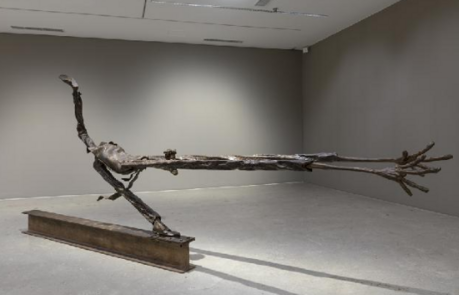
After 46 years away from its original home, the monumental sculpture 'Eutighofer Tor' by renowned artist Eckhart Dietz has returned to its birthplace in Schwäbisch Gmünd, Germany, where it will once again be visible to the public. The large-scale artwork, created in 1969, has been reinstalled at its original location, though the surrounding landscape has dramatically changed over the decades.

The sculpture's homecoming marks a significant cultural milestone for the city of Schwäbisch Gmünd, reconnecting residents and visitors with an important piece of local artistic heritage. Eckhart Dietz, who created this imposing work more than five decades ago, originally designed the sculpture to complement the urban landscape of the historic German town. The artwork had been removed from its original site years ago due to urban development and changing city planning needs.

Today, the 'Eutighofer Tor' finds itself in a completely transformed environment. Where once there may have been different surroundings, the sculpture is now surrounded by a residential development that bears the same name as the artwork itself. This residential complex, called 'Eutighofer Tor,' has grown up around the sculpture's new-old location, creating an interesting juxtaposition between historical art and modern living spaces.

The return of this significant sculpture represents more than just the physical relocation of an artwork; it symbolizes the community's commitment to preserving and celebrating its cultural heritage. Local residents and art enthusiasts have welcomed the sculpture's return, viewing it as an important restoration of the area's artistic identity. The piece serves as a tangible link to the city's cultural past while continuing to inspire new generations of residents and visitors.

The successful reinstallation of 'Eutighofer Tor' demonstrates how communities can successfully balance urban development with cultural preservation, ensuring that important artistic works remain accessible to the public while adapting to changing urban landscapes.


After 46 years away from its original home, the monumental sculpture 'Eutighofer Tor' by renowned artist Eckhart Dietz has returned to its birthplace in Schwäbisch Gmünd, Germany, where it will once again be visible to the public. The large-scale artwork, created in 1969, has been reinstalled at its original location, though the surrounding landscape has dramatically changed over the decades.

The sculpture's homecoming marks a significant cultural milestone for the city of Schwäbisch Gmünd, reconnecting residents and visitors with an important piece of local artistic heritage. Eckhart Dietz, who created this imposing work more than five decades ago, originally designed the sculpture to complement the urban landscape of the historic German town. The artwork had been removed from its original site years ago due to urban development and changing city planning needs.

Today, the 'Eutighofer Tor' finds itself in a completely transformed environment. Where once there may have been different surroundings, the sculpture is now surrounded by a residential development that bears the same name as the artwork itself. This residential complex, called 'Eutighofer Tor,' has grown up around the sculpture's new-old location, creating an interesting juxtaposition between historical art and modern living spaces.

The return of this significant sculpture represents more than just the physical relocation of an artwork; it symbolizes the community's commitment to preserving and celebrating its cultural heritage. Local residents and art enthusiasts have welcomed the sculpture's return, viewing it as an important restoration of the area's artistic identity. The piece serves as a tangible link to the city's cultural past while continuing to inspire new generations of residents and visitors.

The successful reinstallation of 'Eutighofer Tor' demonstrates how communities can successfully balance urban development with cultural preservation, ensuring that important artistic works remain accessible to the public while adapting to changing urban landscapes.
WEEKLY HOTISSUE