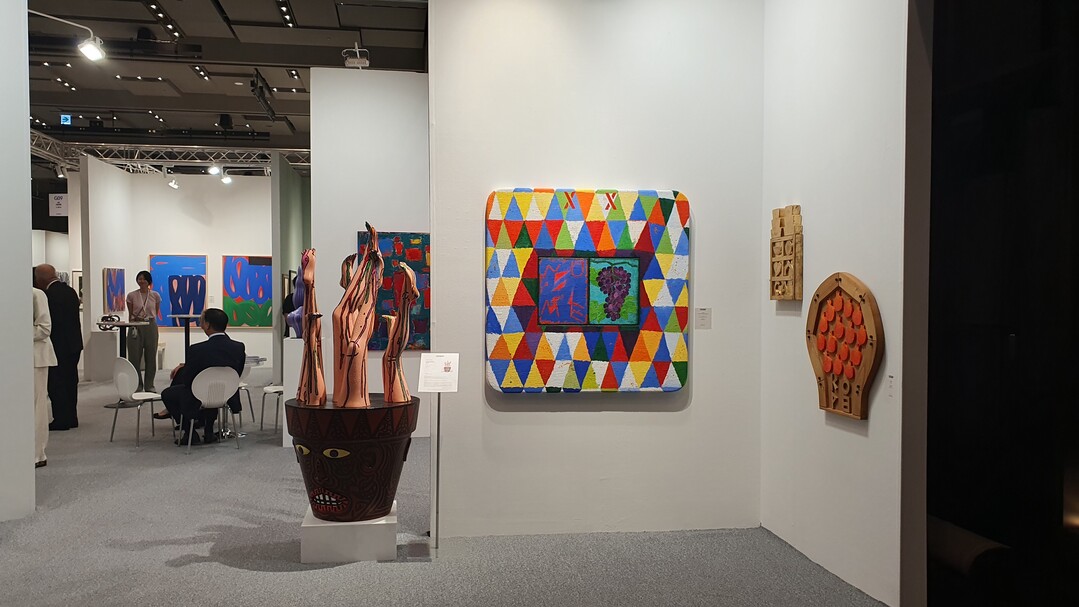
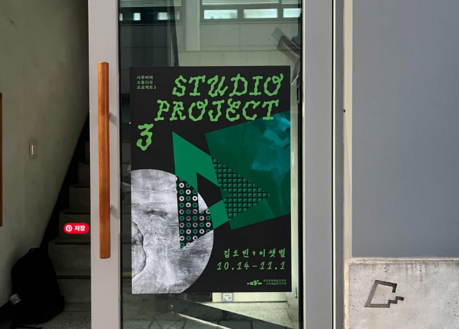
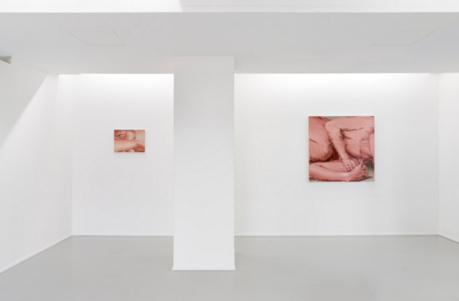
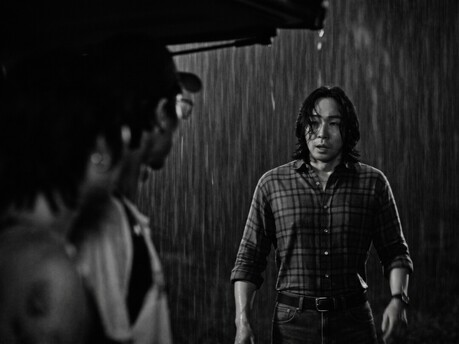
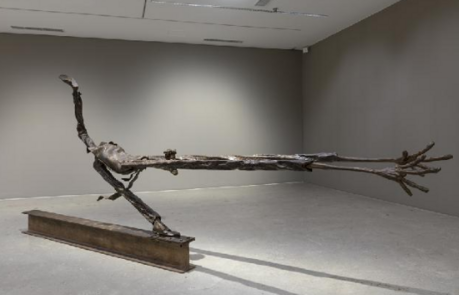
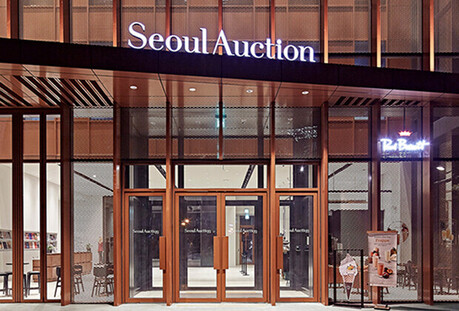
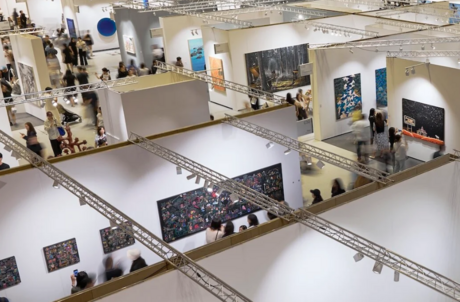
A view of Kiaf SEOUL 2025, where galleries, collectors and visitors encountered contemporary art across different regions and practices. Photo by Maria Kim.
The global art world often uses the phrase “Asian contemporary art.” The term appears in art fair programs, museum exhibitions, gallery statements, collecting categories and market reports. It is useful. It gives audiences a geographic starting point. It helps institutions introduce histories that have long been less visible in Western-centered art narratives. It also allows galleries and museums to bring together artists who have worked across different social, political and material contexts in Asia.
But a useful name can also become a limiting frame.
The question is not whether we should stop calling artists from Asia “Asian artists.” That would be too simple. Geography matters. History matters. Colonial memory, modernization, migration, language, religion, censorship, local materials and regional markets all shape artistic practice. Many artists deliberately work from these conditions. The problem begins when “Asian” becomes the main explanation for the work itself.
This is a problem of reading.
Western artists are often introduced through movements, methods, materials and individual biographies. They are allowed to begin with abstraction, conceptualism, sculpture, performance, language or the body. Artists working across Asia, however, are still too often introduced first through region, tradition or cultural identity. The difference is subtle, but important. One artist begins as a maker of form and thought. The other is first asked to explain where they come from.
This does not mean that regional context should disappear. Without context, many works lose their historical pressure. A work shaped by colonial history, feminist struggle, religious memory or political violence cannot be separated from the world that produced it. But context should help us enter the work, not replace the work.
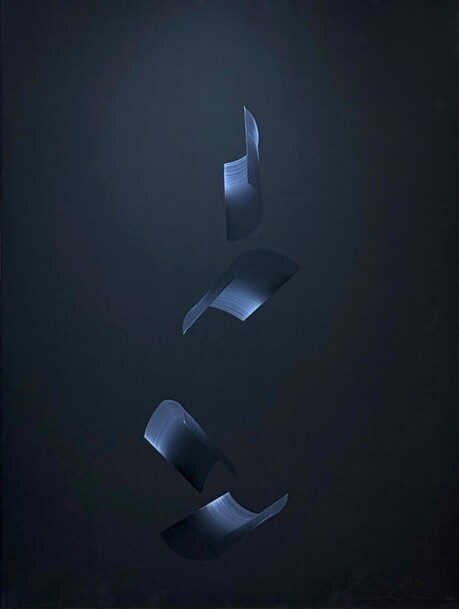
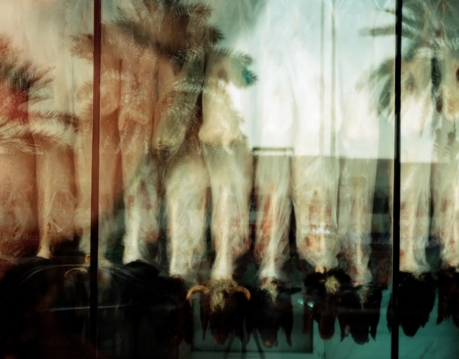
PARK Youngsook’s photography is important within the history of Korean feminist art and photography, but that context alone is not enough. Her work should also be read through the representation of women’s bodies, social memory and the capacity of photography to hold both individual lives and the realities of an era. Leslie de CHAVEZ’s paintings engage with colonial history, Catholic iconography and political corruption in the Philippines, but they also operate through satire, symbolism, figural composition and visual density. AOKIZY translates the tension between digital images and physical media into painting and sculpture, while Kohei NAWA examines perception through light, surface and shifting viewpoints. Kohei YAMADA’s paintings build the boundary between urban environments and nature, abstraction and landscape, through layered fields of color. If these artists are simply grouped under the label of “Asian artists,” the formal languages and questions each of them has developed become blurred.
The term “Asian contemporary art” has played an important role. It has helped build visibility for artists and histories that were not always properly collected, translated or circulated. Archives, museums, biennials and art fairs have all used regional frameworks to make complex histories visible. In that sense, “Asian” has been a doorway.
But a doorway should not become a container.
Asia is not one aesthetic, one market, one tradition or one political condition. It is a vast and uneven field of different histories, urban speeds, religious memories, colonial wounds, local crafts, digital economies, pop images, political ruptures and private griefs. To call all of this “Asian” may be convenient, but convenience can flatten complexity.
This is why art fairs are important testing grounds. A booth is not only a place to sell works. It isAsian” may be convenient, but convenience can flatten complexity.
This is why art fairs are important testing grounds. A booth is not only a place to sell works. It is a compressed argument. Which artists are placed together? Which histories are allowed to meet? Which works are asked to represent a region, and which are allowed to stand as singular artistic languages?
For galleries working across Asia, the task is delicate. They must make artists legible to an international audience without making them simple. They must translate context without turning context into a label. They must show that a work may carry Korean, Japanese, Filipino, Thai or Indonesian histories, while still exceeding those categories.
The next stage for Asian contemporary art is not only more visibility. It is more precise reading.
That precision begins with language. “Asian artists” may still be used, but it should not be the final description. At times, “artists from Asia,” “Asia-based artists,” or “artists working across contemporary Asian art scenes” may better express the actual field in which these practices unfold. These phrases do not erase region. They simply avoid turning region into destiny.
The issue, then, is not the word “Asian” itself. The issue is how quickly the word becomes a substitute for looking.
To read artists well is to stay longer with the work. What materials are being used? What kind of time is held in the surface? What histories are visible, and which ones are hidden? What is the artist doing with image, body, memory, labor, humor, pain or silence? These questions bring us closer to the work than any regional label can.
“Contemporary Asian art” may remain a necessary phrase, but its value lies not in classifying artists. It should lead viewers toward the specific forms, materials, histories and questions each work carries.
Only then can artists working across Asia be seen not as representatives of a region, but as individual voices shaping the language of global contemporary art.
[Sayart = Maria Kim] sayart2022@gmail.com
As artists working across Asia gain stronger visibility in global art fairs, the task is not to erase the word “Asian,” but to read each work beyond the regional label.A view of Kiaf SEOUL 2025, where galleries, collectors and visitors encountered contemporary art across different regions and practices. Photo by Maria Kim.
The global art world often uses the phrase “Asian contemporary art.” The term appears in art fair programs, museum exhibitions, gallery statements, collecting categories and market reports. It is useful. It gives audiences a geographic starting point. It helps institutions introduce histories that have long been less visible in Western-centered art narratives. It also allows galleries and museums to bring together artists who have worked across different social, political and material contexts in Asia.
But a useful name can also become a limiting frame.
The question is not whether we should stop calling artists from Asia “Asian artists.” That would be too simple. Geography matters. History matters. Colonial memory, modernization, migration, language, religion, censorship, local materials and regional markets all shape artistic practice. Many artists deliberately work from these conditions. The problem begins when “Asian” becomes the main explanation for the work itself.
This is a problem of reading.
Western artists are often introduced through movements, methods, materials and individual biographies. They are allowed to begin with abstraction, conceptualism, sculpture, performance, language or the body. Artists working across Asia, however, are still too often introduced first through region, tradition or cultural identity. The difference is subtle, but important. One artist begins as a maker of form and thought. The other is first asked to explain where they come from.
This does not mean that regional context should disappear. Without context, many works lose their historical pressure. A work shaped by colonial history, feminist struggle, religious memory or political violence cannot be separated from the world that produced it. But context should help us enter the work, not replace the work.
PARK Youngsook’s photography is important within the history of Korean feminist art and photography, but that context alone is not enough. Her work should also be read through the representation of women’s bodies, social memory and the capacity of photography to hold both individual lives and the realities of an era. Leslie de CHAVEZ’s paintings engage with colonial history, Catholic iconography and political corruption in the Philippines, but they also operate through satire, symbolism, figural composition and visual density. AOKIZY translates the tension between digital images and physical media into painting and sculpture, while Kohei NAWA examines perception through light, surface and shifting viewpoints. Kohei YAMADA’s paintings build the boundary between urban environments and nature, abstraction and landscape, through layered fields of color. If these artists are simply grouped under the label of “Asian artists,” the formal languages and questions each of them has developed become blurred.
The term “Asian contemporary art” has played an important role. It has helped build visibility for artists and histories that were not always properly collected, translated or circulated. Archives, museums, biennials and art fairs have all used regional frameworks to make complex histories visible. In that sense, “Asian” has been a doorway.
But a doorway should not become a container.
Asia is not one aesthetic, one market, one tradition or one political condition. It is a vast and uneven field of different histories, urban speeds, religious memories, colonial wounds, local crafts, digital economies, pop images, political ruptures and private griefs. To call all of this “Asian” may be convenient, but convenience can flatten complexity.
This is why art fairs are important testing grounds. A booth is not only a place to sell works. It isAsian” may be convenient, but convenience can flatten complexity.
This is why art fairs are important testing grounds. A booth is not only a place to sell works. It is a compressed argument. Which artists are placed together? Which histories are allowed to meet? Which works are asked to represent a region, and which are allowed to stand as singular artistic languages?
For galleries working across Asia, the task is delicate. They must make artists legible to an international audience without making them simple. They must translate context without turning context into a label. They must show that a work may carry Korean, Japanese, Filipino, Thai or Indonesian histories, while still exceeding those categories.
The next stage for Asian contemporary art is not only more visibility. It is more precise reading.
That precision begins with language. “Asian artists” may still be used, but it should not be the final description. At times, “artists from Asia,” “Asia-based artists,” or “artists working across contemporary Asian art scenes” may better express the actual field in which these practices unfold. These phrases do not erase region. They simply avoid turning region into destiny.
The issue, then, is not the word “Asian” itself. The issue is how quickly the word becomes a substitute for looking.
To read artists well is to stay longer with the work. What materials are being used? What kind of time is held in the surface? What histories are visible, and which ones are hidden? What is the artist doing with image, body, memory, labor, humor, pain or silence? These questions bring us closer to the work than any regional label can.
“Contemporary Asian art” may remain a necessary phrase, but its value lies not in classifying artists. It should lead viewers toward the specific forms, materials, histories and questions each work carries.
Only then can artists working across Asia be seen not as representatives of a region, but as individual voices shaping the language of global contemporary art.
Warning: Trying to access array offset on value of type bool in /home/sayart/public_html/_libs/smarty/templates_c/103e99f6d7d08ee6b6541efd32c0ef2f33076acc_0.file.news_3t_view.tpl.php on line 56
Warning: Trying to access array offset on value of type bool in /home/sayart/public_html/_libs/smarty/templates_c/103e99f6d7d08ee6b6541efd32c0ef2f33076acc_0.file.news_3t_view.tpl.php on line 59