Kandinsky Painting Sold by Guggenheim for $62000 Could Fetch $80 Million
Published November 2, 2026 10:54 PM
Jason Yim
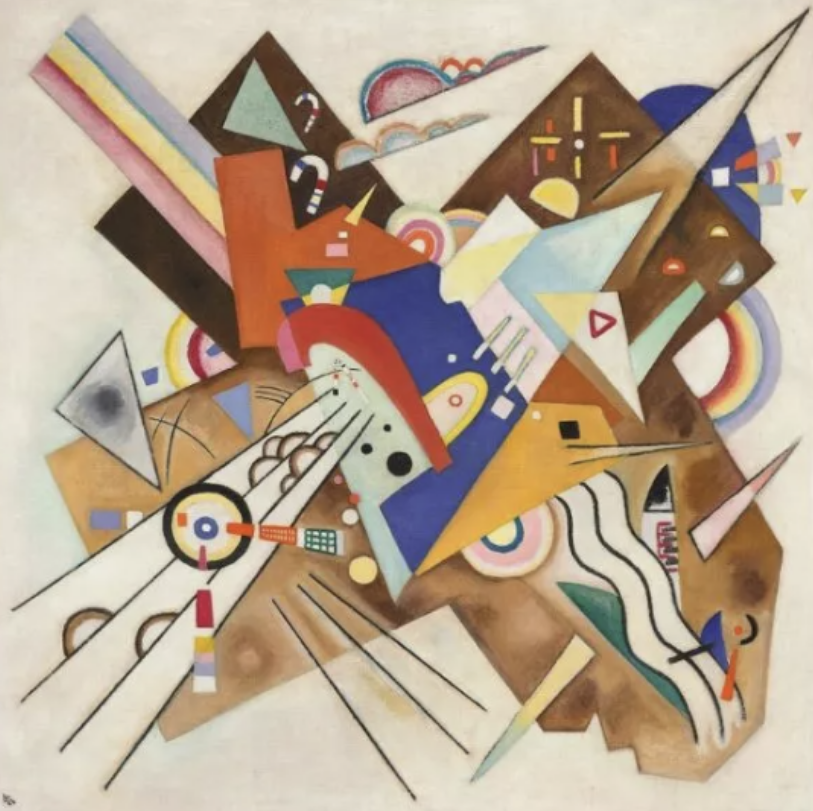
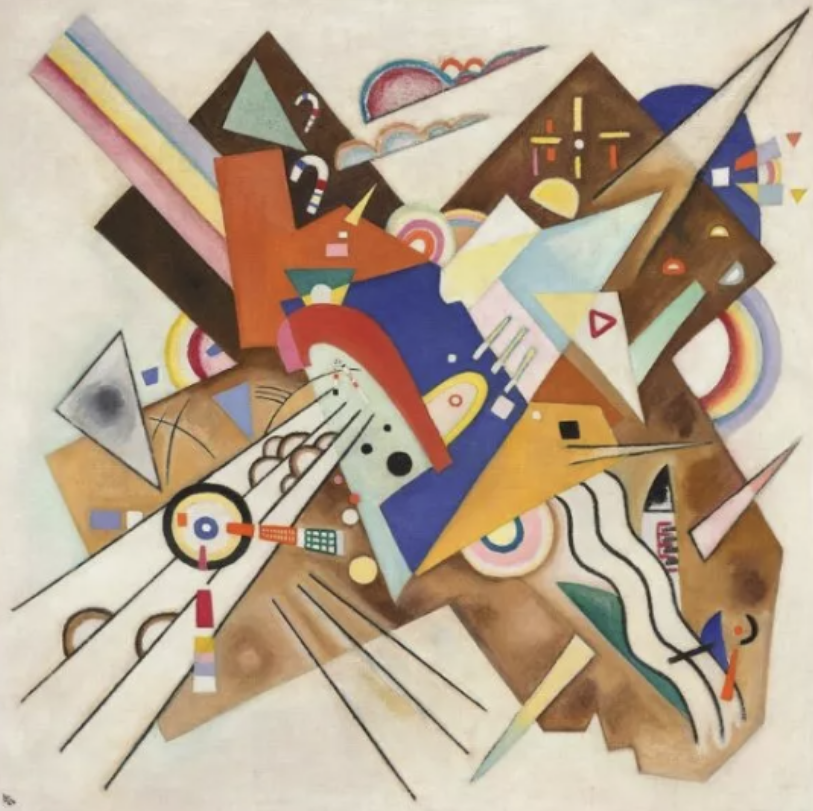
translated as Accented Corners by Wassily Kandinsky, Courtesy of Christie
A Wassily Kandinsky painting sold by the Solomon R. Guggenheim Foundation in 1964 is returning to auction with an estimate of $60 million to $80 million.
Christie’s will offer Betonte Ecken—translated as Accented Corners—during its 20th Century Evening Sale in New York on Nov. 17. The oil painting measures 130 by 130 centimetres and was produced in Weimar between December 1922 and January 1923.
The Guggenheim Foundation sold the work at Sotheby’s in London for £22000, then equivalent to about $62000. Its upper estimate at Christie’s is nearly 1300 times that nominal dollar value.
Adjusted for inflation, the 1964 price would amount to approximately $540000 today. The work formed part of a larger deaccession in which the foundation sold 50 of its 170 Kandinsky paintings, citing a lack of space and concern that the works would remain inaccessible in storage.
The group of 50 paintings generated a combined £536580 at the London auction. Solomon R. Guggenheim had assembled a substantial collection of Kandinsky’s work with guidance from German artist and curator Hilla Rebay, who became the first director of the Museum of Non-Objective Painting, the institution now known as the Solomon R. Guggenheim Museum.
Rebay acquired Betonte Ecken in 1929, making it the first known Kandinsky painting in her collection. It later entered Guggenheim’s collection and was transferred to the foundation before its sale in 1964. The current owner acquired it at auction in 1986.
Kandinsky created the painting shortly after joining the Bauhaus faculty, where he taught art theory. The work belongs to a period in which geometric forms became increasingly prominent in his practice.
Circles, triangles, straight lines and coloured planes are arranged across the square canvas. Its intersecting diagonal structure directs the viewer’s gaze from the central forms toward the four corners, reflecting Kandinsky’s developing theories about the relationship between points, lines and planes.
Christie’s describes the painting as an early example of the formal principles later articulated in Kandinsky’s 1926 book Point and Line to Plane. The artist’s interest in music also informed his effort to organise colour, rhythm and geometric form as elements within a unified composition.
The auction could establish a new record for Kandinsky. The current record was set in 2023, when Murnau mit Kirche II sold at Sotheby’s in London for £37.2 million, equivalent to about $44.9 million at the time.
Christie’s has said the lot is backed by a guarantee exceeding that record price. If bidding reaches the published estimate, Betonte Ecken would become the most expensive Kandinsky work sold at auction.
SayArt.net Jason Yim yimjongho1969@gmail.com
Christie’s will offer the Bauhaus-period work ‘Betonte Ecken’ in New York on Nov. 17translated as Accented Corners by Wassily Kandinsky, Courtesy of Christie
A Wassily Kandinsky painting sold by the Solomon R. Guggenheim Foundation in 1964 is returning to auction with an estimate of $60 million to $80 million.
Christie’s will offer Betonte Ecken—translated as Accented Corners—during its 20th Century Evening Sale in New York on Nov. 17. The oil painting measures 130 by 130 centimetres and was produced in Weimar between December 1922 and January 1923.
The Guggenheim Foundation sold the work at Sotheby’s in London for £22000, then equivalent to about $62000. Its upper estimate at Christie’s is nearly 1300 times that nominal dollar value.
Adjusted for inflation, the 1964 price would amount to approximately $540000 today. The work formed part of a larger deaccession in which the foundation sold 50 of its 170 Kandinsky paintings, citing a lack of space and concern that the works would remain inaccessible in storage.
The group of 50 paintings generated a combined £536580 at the London auction. Solomon R. Guggenheim had assembled a substantial collection of Kandinsky’s work with guidance from German artist and curator Hilla Rebay, who became the first director of the Museum of Non-Objective Painting, the institution now known as the Solomon R. Guggenheim Museum.
Rebay acquired Betonte Ecken in 1929, making it the first known Kandinsky painting in her collection. It later entered Guggenheim’s collection and was transferred to the foundation before its sale in 1964. The current owner acquired it at auction in 1986.
Kandinsky created the painting shortly after joining the Bauhaus faculty, where he taught art theory. The work belongs to a period in which geometric forms became increasingly prominent in his practice.
Circles, triangles, straight lines and coloured planes are arranged across the square canvas. Its intersecting diagonal structure directs the viewer’s gaze from the central forms toward the four corners, reflecting Kandinsky’s developing theories about the relationship between points, lines and planes.
Christie’s describes the painting as an early example of the formal principles later articulated in Kandinsky’s 1926 book Point and Line to Plane. The artist’s interest in music also informed his effort to organise colour, rhythm and geometric form as elements within a unified composition.
The auction could establish a new record for Kandinsky. The current record was set in 2023, when Murnau mit Kirche II sold at Sotheby’s in London for £37.2 million, equivalent to about $44.9 million at the time.
Christie’s has said the lot is backed by a guarantee exceeding that record price. If bidding reaches the published estimate, Betonte Ecken would become the most expensive Kandinsky work sold at auction.
Warning: Trying to access array offset on value of type bool in /home/sayart/public_html/_libs/smarty/templates_c/103e99f6d7d08ee6b6541efd32c0ef2f33076acc_0.file.news_3t_view.tpl.php on line 56
Warning: Trying to access array offset on value of type bool in /home/sayart/public_html/_libs/smarty/templates_c/103e99f6d7d08ee6b6541efd32c0ef2f33076acc_0.file.news_3t_view.tpl.php on line 59